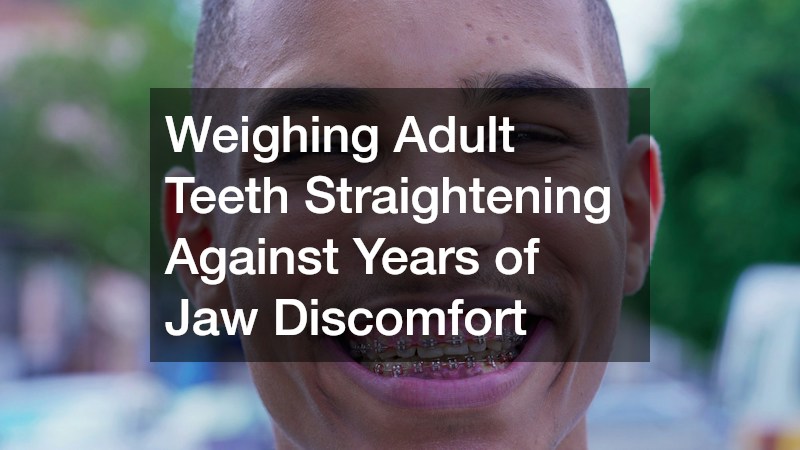

Living with crooked teeth as an adult often means living with more than a smile you’re self-conscious about. Many people quietly endure years of jaw tension, headaches, and discomfort without realizing the root cause might be their bite alignment. Deciding whether to pursue teeth straightening later in life involves weighing real costs and time commitments against the physical toll of leaving the problem untreated. This article breaks down what that decision actually looks like so you can make a choice based on facts, not guesswork.
Recognizing the Signs of Jaw Strain From Misaligned Teeth
Jaw discomfort rarely shows up out of nowhere. It tends to build gradually as teeth that don’t meet properly force the jaw muscles and joints to compensate every time you chew, talk, or even rest your mouth closed. Over years, this compensation can lead to chronic soreness, clicking sounds, or a feeling of tightness around the temples and ears. The specific signs worth paying attention to vary from person to person, but a few patterns show up consistently. Morning headaches or a sore jaw upon waking often point to nighttime clenching or grinding caused by a bite that doesn’t settle correctly. Popping or clicking when opening wide, difficulty chewing tough foods on one side, and a jaw that feels like it “locks” briefly are also common complaints among people with long-standing misalignment. Many people also notice uneven wear on their teeth, which is a clue that the jaw is working harder in certain spots to make up for the misalignment. Ear pain, ringing, or a sense of fullness without any signs of infection can likewise trace back to joint strain near the temporomandibular joint rather than a hearing issue. Some describe a vague fatigue in the face or jaw after long conversations or meals, which is easy to dismiss but shouldn’t be ignored if it happens regularly. Recognizing these patterns early can help you decide whether the discomfort is something to monitor or something that needs professional attention. A dentist or orthodontist can often tell within a single exam whether these symptoms stem from bite misalignment, and catching it sooner typically means simpler, less invasive treatment down the road.
- Frequent headaches that start near the jaw hinge or temples, often mistaken for tension or stress headaches
- A popping or clicking sound when opening and closing the mouth, particularly noticeable while chewing or yawning
- Soreness or tightness after eating, especially tougher foods like steak, raw vegetables, or chewy bread
- Teeth that look worn down, flattened, or chipped on the edges from uneven bite pressure
- Difficulty finding a comfortable resting position for the jaw, sometimes leading to unconscious clenching at night
- Clenching or grinding noticed by a partner, or evidenced by a worn-down nightguard
- Earaches or a feeling of fullness in the ears with no signs of infection, since the jaw joint sits close to the ear canal
- Neck or shoulder tension that seems unrelated to posture or exercise
Comparing Treatment Timelines and Daily Impact

One of the biggest hesitations adults have about straightening their teeth is the perceived time commitment. Traditional metal braces typically require eighteen months to three years depending on the severity of misalignment, while clear aligner systems can sometimes complete mild to moderate cases faster. Many adults now choose Invisalign specifically because the trays are removable, which means fewer disruptions to eating habits and professional appearances during the workday. Comparing timelines honestly against your current discomfort level, rather than against an idealized fast fix, gives a more realistic picture of what treatment will actually involve.
It’s also worth considering how each option fits into a daily routine you already have. Some people find that remembering to wear removable aligners for the recommended twenty-two hours a day takes more discipline than expected, while others appreciate not having wires to navigate around. Either way, the timeline you choose should match your lifestyle and your tolerance for visible dental work during the process.
Understanding the Financial Side of Delayed Treatment
Cost is often the deciding factor for adults putting off treatment, but it helps to look at the full financial picture rather than just the upfront price tag. Jaw discomfort left untreated can lead to additional expenses down the road, including dental work for worn enamel, night guards for teeth grinding, or visits to specialists for chronic pain management. When these ongoing costs are added up over several years, they sometimes rival or exceed the cost of straightening treatment itself. Looking at the numbers this way reframes the decision from an optional expense to a long-term investment in comfort.
- Potential cost of custom night guards for grinding relief
- Dental visits related to worn or cracked teeth
- Physical therapy or specialist consultations for jaw pain
- Possible need for restorative work like crowns later on
Evaluating How Misalignment Affects Sleep and Daily Function
Jaw discomfort doesn’t stay contained to just the mouth. Many adults with misaligned bites report disrupted sleep because the jaw muscles stay tense even at rest, sometimes contributing to teeth grinding during the night. This tension can carry into the next day as fatigue, neck stiffness, or difficulty concentrating, which many people don’t immediately connect back to their teeth. Addressing the alignment issue can sometimes resolve these secondary symptoms entirely, which is a benefit that goes well beyond cosmetic improvement.
Deciding Whether Early Treatment in Children Could Have Prevented Adult Issues
Looking back, many adults wonder whether their current jaw discomfort could have been avoided with earlier intervention. Dentists often recommend evaluating alignment issues well before adulthood, since kids braces can guide jaw development while the bone structure is still growing and more responsive to gradual pressure. This doesn’t mean adults who missed that window are out of options, but it does explain why some people develop more significant jaw strain than others. Understanding this history can also inform decisions for your own children or grandchildren, potentially saving them from a similar years-long struggle.
Weighing Lifestyle Adjustments Against Long Term Comfort
Any teeth straightening option requires some adjustment period, whether that means avoiding certain foods, keeping up with cleaning routines, or attending regular checkups. The question worth asking is whether a temporary period of inconvenience is worth trading for potentially years of reduced jaw pain and better oral function. Most people who complete treatment report that the adjustment phase, while occasionally frustrating, was far shorter than the years they had already spent managing discomfort. Framing the decision around total years of comfort gained, rather than months of adjustment required, often makes the choice clearer.
- Temporary dietary changes during active treatment
- Extra time needed for cleaning around dental appliances
- Regular checkups to monitor progress
- Potential short-term discomfort as teeth shift position
Choosing whether to pursue adult teeth straightening ultimately comes down to comparing a defined, temporary treatment period against years of ongoing jaw discomfort that may continue to worsen without intervention. The evidence suggests that addressing misalignment sooner rather than later tends to prevent additional complications and expenses down the road. If you’ve been living with jaw tension, headaches, or worn teeth, scheduling a consultation with a dental professional is a practical next step toward understanding your specific options.