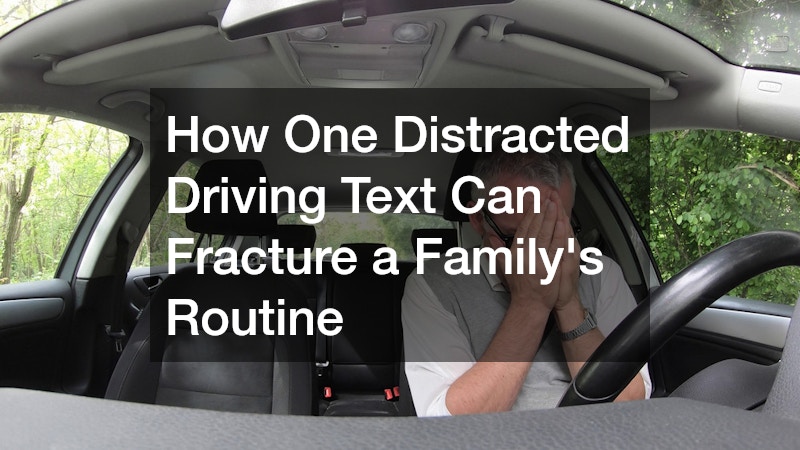

A single glance at a phone screen takes less than five seconds, but the consequences can ripple through a family for years. What starts as a quick text back to a coworker or a peek at a group chat can end in a collision that upends school pickups, work schedules, medical appointments, and the everyday rhythms families rely on. Understanding how distracted driving disrupts household routines, and what steps to take if it happens to your family, can help you protect your loved ones and respond wisely if the worst occurs.
The Five Seconds That Change a Daily Schedule
Most families run on a tight, invisible schedule built around school drop-offs, work shifts, sports practices, and meal times. When a car accident happens because someone was texting, that schedule doesn’t just pause, it collapses. A parent who normally handles morning carpool might suddenly be in a hospital waiting room, while another scrambles to cover childcare, work obligations, and household duties all at once.
The disruption often lasts far longer than the initial crash. Recovery from even minor injuries can take weeks, and more serious injuries can sideline a parent or caregiver for months. Families often don’t realize how many small routines depend on one person’s mobility and availability until that person is suddenly unable to drive, lift groceries, or attend a child’s event.
How One Injury Reshapes Household Responsibilities
When one family member is injured in a distracted driving crash, the remaining household members typically absorb their responsibilities overnight. This shift can create stress, financial strain, and emotional exhaustion, especially in families where both parents work or where there is only one caregiver managing the home.
- A working parent may need to reduce hours or take unpaid leave to help with recovery
- Siblings may take on more chores or caregiving duties for younger children
- Grandparents or extended family may need to step in temporarily
- Extracurricular activities and social plans often get postponed or canceled
- Meal planning and household budgeting frequently change due to medical costs
Medical Appointments and the New Family Calendar

After a crash, the family calendar often fills up quickly with physical therapy sessions, follow-up doctor visits, imaging appointments, and specialist consultations. A single injury might require two or three PT sessions per week for months, plus periodic check-ins with an orthopedist, neurologist, or pain management specialist. What used to be a calendar of soccer practices and dentist visits becomes a logistics puzzle with much higher stakes. These appointments frequently land in the middle of the workday, since many clinics only offer limited hours, forcing someone to take time off, use PTO, or ask coworkers to cover shifts. When both parents work, families must constantly renegotiate who is where and when, often trading off school pickups, sibling activities, and appointment duty on a week-by-week basis. A missed therapy session isn’t just inconvenient; it can slow recovery or trigger disputes with insurers about whether treatment is being followed consistently. Transportation adds another layer of complexity, especially if the injured person can’t drive due to pain medication, a leg injury, or restricted mobility. That often means a family member has to leave work early, arrange rides, or rely on rideshare services, all of which cost time and money. Younger children may need to tag along to appointments simply because there’s no one else to watch them. Even a seemingly straightforward injury, like a fractured wrist or mild concussion, can require months of ongoing care, including follow-up scans, physical therapy, and gradual return-to-activity evaluations. More serious injuries can stretch into a year or more of treatment, with the schedule shifting as new specialists get added or complications arise. This keeps the disruption going long after the crash itself is over, turning what looked like a temporary inconvenience into a prolonged reshaping of daily family life.
Many families are surprised by how much coordination this requires, particularly when the injured person is a primary caregiver. A single crash can suddenly generate a rotating schedule of physical therapy sessions, follow-up scans, specialist consultations, and prescription pickups, all layered on top of school drop-offs and work obligations that don’t pause for recovery. Transportation becomes a recurring challenge, since the injured person may be temporarily unable to drive for weeks or even months depending on the injury. Spouses, relatives, or neighbors often step in to shuttle kids to practice or get the injured person to appointments, and some families end up relying on rideshare services or medical transport, which adds unexpected cost. Missed workdays compound the problem, since someone has to take time off to manage appointments that can’t be scheduled around a nine-to-five job. This is often when families begin exploring whether they need outside guidance, such as speaking with a car accident lawyer, to understand how medical costs and lost time might be recovered. A clear picture of these expenses, including mileage, childcare gaps, and lost wages, can make a meaningful difference when it comes time to negotiate compensation.
Financial Strain From Medical Bills and Missed Work
Distracted driving crashes often come with financial consequences that extend well beyond the initial emergency room visit. Between medical bills, prescription costs, physical therapy, and lost wages, many families feel the financial pressure almost immediately. Even with insurance, out-of-pocket costs can add up quickly, especially if recovery takes longer than expected.
- Emergency care and diagnostic imaging can generate significant upfront costs
- Missed work hours often mean reduced income during recovery
- Follow-up care, medication, and rehabilitation add ongoing expenses
- Property damage repairs or replacement vehicles add another financial layer
- Childcare costs may increase if a parent cannot manage usual duties
Emotional Aftershocks That Linger Beyond Recovery
The emotional impact of a distracted driving crash often outlasts the physical injuries. Family members may experience anxiety about driving, heightened stress during car rides, or lingering worry about safety. Children in particular may struggle to understand why a parent is suddenly unavailable or in pain, which can affect their sense of stability at home.
These emotional aftershocks can affect sleep, mood, and even school or work performance for everyone in the household, not just the person who was injured. Family counseling or support groups can help, but many families don’t think to seek this kind of help until the stress becomes overwhelming. Recognizing these emotional ripple effects early can make it easier to address them before they take a larger toll.
Steps Families Can Take After a Distracted Driving Crash
Knowing what to do immediately after a crash can reduce confusion and help protect a family’s wellbeing in the days that follow. The first priority is always safety and medical evaluation, even when everyone involved feels fine. Adrenaline can mask pain, and many symptoms, especially those related to soft tissue injuries or concussions, don’t appear until hours or days later. Clear documentation matters just as much as medical care. Families should try to gather the other driver’s contact and insurance information, take photos of vehicle damage and the accident scene, and note the time, location, and weather conditions. If a police report is filed, requesting a copy for personal records can help later when dealing with insurance claims or legal questions. It’s also worth watching for signs that phone use played a role in the crash, such as an unexplained lane drift or a delayed reaction before impact. This detail can matter significantly if the case moves toward an insurance dispute or legal claim. Keeping a simple written timeline of events, symptoms, and follow-up appointments in the days after the crash can make it much easier to track recovery and communicate clearly with doctors, insurers, or an attorney.
- Seek medical evaluation promptly, even for minor-seeming injuries, since conditions like whiplash or concussions can take days to appear
- Document the scene with photos of vehicle damage, road conditions, and traffic signals, and gather witness names and contact information
- Keep records of medical visits, missed work, prescriptions, and related expenses like childcare or transportation costs
- Save copies of the police report and any insurance correspondence in one place for easy reference
- Communicate openly with children about changes to routines, using age-appropriate explanations for new schedules or a parent’s recovery
- Watch for signs of anxiety in kids, such as reluctance to ride in cars, and consider talking to a counselor if needed
- Consider consulting a personal injury lawyer to understand available options for recovering losses, including medical bills, lost wages, and pain and suffering
- Ask a personal injury lawyer about deadlines for filing claims, since statutes of limitations vary by state
In the days after a crash, many families face a flood of practical decisions: which medical providers to see, how to document injuries, and how to communicate with insurance adjusters who may call within hours of the accident. Keeping a simple file of medical records, repair estimates, missed work hours, and photos from the scene can make a real difference later, even if legal action isn’t yet on the table. As bills accumulate and paychecks shrink due to missed work, many families eventually turn to a personal injury law firm for guidance. An experienced attorney can help estimate the true cost of a crash, factoring in not just emergency room visits but future physical therapy, lost earning potential, and pain and suffering that insurance companies often undervalue. Most personal injury law firms offer free initial consultations, which gives families a low-risk way to understand their options before committing to anything. Attorneys can also handle negotiations with insurers directly, so parents aren’t stuck fielding calls while also managing appointments, childcare, and recovery. Having a clear understanding of legal options can relieve some of the uncertainty during an already stressful time, allowing families to focus more energy on healing and rebuilding their routines.
A distracted driving crash can disrupt far more than a single afternoon, it can reshape a family’s schedule, finances, and emotional wellbeing for months. Recognizing these ripple effects early, and taking practical steps like documenting the incident and seeking appropriate support, can help families regain stability sooner. If your family is navigating the aftermath of a crash, focusing on recovery and informed decision-making is the best next step toward restoring your routine.