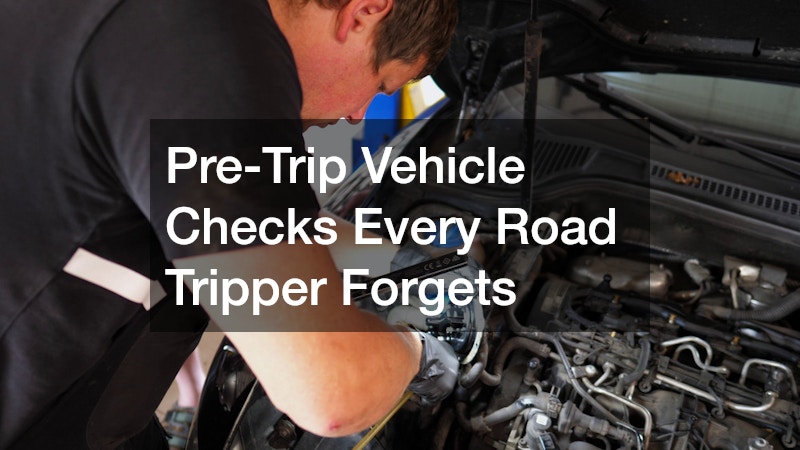

Road trips have a way of exposing every shortcut taken during vehicle maintenance. Most drivers remember to fill the gas tank and check the tire pressure before leaving the driveway — but those two habits barely scratch the surface of what a long drive demands from a vehicle. The checks that actually prevent breakdowns, accidents, and expensive roadside calls are the ones that rarely make it onto anyone’s mental checklist. Understanding what gets skipped, and why it matters at highway speeds and high mileage, is the difference between a trip that goes smoothly and one that doesn’t.
The Checks Hiding in Plain Sight
Fluid levels beyond the gas tank are where most drivers go wrong. Engine oil gets checked occasionally, but transmission fluid, power steering fluid, brake fluid, and coolant are routinely ignored until something fails. Brake fluid is particularly worth attention before a long trip because it absorbs moisture over time, which lowers its boiling point. On steep mountain descents or during heavy braking, degraded brake fluid can boil inside the lines and cause a sudden, terrifying loss of pedal pressure. The Department of Transportation’s Federal Motor Carrier Safety Administration recommends brake system inspections as a baseline safety measure — the same logic applies to personal vehicles, not just commercial ones.
Coolant condition matters just as much as coolant level. A 50/50 mix of antifreeze and distilled water is the standard recommendation for most vehicles, but many drivers top off the reservoir with straight water, diluting the mix and lowering its boiling threshold. On a hot highway day with the AC running, a weakened coolant system can push engine temperature into the danger zone faster than expected.
Before a long trip, run through this check:
- Verify brake fluid level is at the MAX line on the reservoir; if it sits closer to MIN, have the system inspected rather than simply topping it off, since low fluid can indicate worn brake pads or a slow leak.
- Check coolant concentration using an inexpensive refractometer (typically under $20) to confirm the mix is protective down to at least -34°F.
- Confirm windshield washer fluid is full — at highway speeds, a single dead bug smear can compromise visibility faster than expected.
Tires Tell You More Than the Pressure Gauge Does
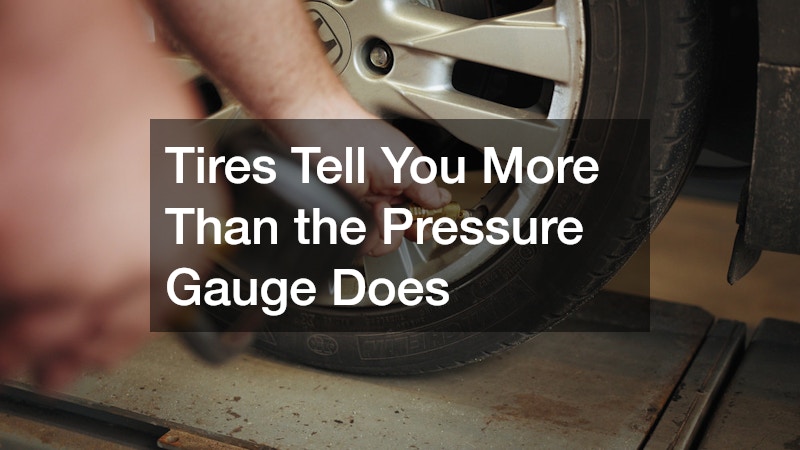
Tire pressure checks before a road trip are common. Tire condition checks are not. Pressure is a 30-second job; condition requires actually crouching down and looking at each tire carefully, which most people skip. The two things that cause the most blowout risk — tread wear and sidewall damage — are both invisible from the driver’s seat.
Tread depth is the starting point. The legal minimum in most U.S. states is 2/32 of an inch, but tires at that depth perform poorly in wet conditions. A tire showing 4/32 or less should be treated as a replacement candidate before any multi-day highway drive. The quarter test (insert a quarter upside down — if Washington’s head is fully visible, the tread is marginal) gives a quick read at around 4/32.
Sidewall bulges, cracks, and cuts are a separate concern entirely. A bulge means the internal structure of the tire has already partially failed. That tire is a blowout waiting to happen, not a tire that can be driven on carefully. Sidewall cracks from UV exposure and age — sometimes called dry rot — also signal that the rubber has lost its structural integrity even if tread depth looks fine. Tires older than six years carry elevated risk regardless of visual appearance, because the rubber compounds degrade internally.
The spare tire deserves the same inspection. A flat spare in the trunk is functionally useless. Check its pressure (most full-size spares should be inflated to 60 PSI; compact spares typically require 60 PSI as well, but confirm against the placard), and verify the jack and lug wrench are actually in the vehicle.
Under the Hood Items That Get Forgotten Until They Fail
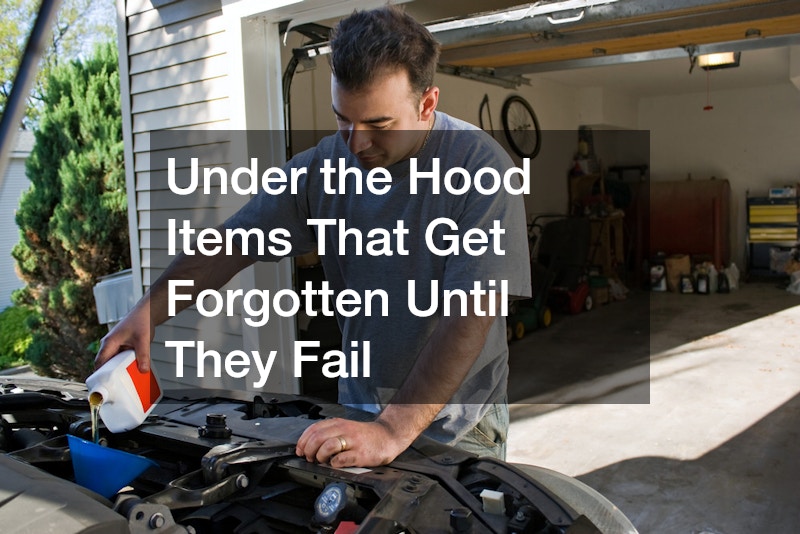
The serpentine belt is one of the most consequential components most road trippers never think about. It drives the alternator, power steering pump, water pump, and air conditioning compressor simultaneously. When it fails — and belts can fail suddenly rather than gradually — the vehicle loses charging, cooling, and in some cases power steering at once. Inspect for cracks, fraying, glazing, or missing chunks along the belt’s inner surface. A belt showing visible cracks every inch or two is overdue for replacement.
Battery health is frequently misjudged because a battery that starts the car fine at home may not recover well after sitting during an overnight stop or after extended use of headlights, AC, and USB charging simultaneously. Most auto parts stores will test battery load capacity for free. If the battery is over four years old, a load test before a major trip is worth the 10 minutes it takes.
The connection between routine shop maintenance and road readiness is often underestimated. When shops perform undercarriage and brake inspections using a vehicle lift, the quality of that lift matters — a poorly maintained lift can affect inspection access and thoroughness, which is why proper auto lift repair ensures that technicians can actually reach and assess every component correctly.
Air filter condition affects fuel efficiency noticeably on highway driving. A clogged filter can reduce fuel economy by up to 10%, according to the U.S. Department of Energy. Pull it out and hold it up to a light source; if light barely passes through, it needs replacement before the trip.
Emergency Readiness Drivers Overlook Until They Need It
Having a functioning vehicle is only part of road trip preparedness. What happens when something goes wrong on a stretch of highway with no service for 40 miles matters just as much.
A roadside emergency kit sounds obvious, but the contents of most kits are either expired, incomplete, or were never assembled in the first place. At minimum, a useful kit contains:
- Jumper cables or a lithium jump starter rated at least 400 amps peak, capable of starting a 4-cylinder engine without a second vehicle.
- A reflective triangle or LED road flares — traditional flares expire and can be a fire hazard near fuel leaks.
- A tire plug kit and a 12V inflator capable of reaching 60 PSI, which handles both compact spare inflation and minor puncture repair without waiting for roadside assistance.
First aid supplies and a phone charging cable are standard additions. Less standard but equally important: know where your vehicle’s tow point is located before you need it. Many modern vehicles have hidden tow hooks that require a stored tool to install, and that tool is sometimes missing from used vehicles.
Before You Leave the Driveway
The checks most drivers forget are not particularly difficult — they just require a deliberate habit rather than a passing glance. The week before a trip is actually the right window for most of these, not the morning of departure. Tire replacement, belt swaps, and battery testing all require at least a day if any shop time is involved. Leaving that time buffer also eliminates the pressure of skipping something because there’s no time to fix it.
Run through fluids, tires, belts, and the emergency kit as a unit rather than trying to remember each independently. A physical checklist on the phone or printed out and kept in the glovebox makes this routine rather than reactive. The vehicle that makes it home safely is almost always the one whose driver spent 45 minutes the Thursday before departure doing what this article describes.